

Subtotal $0.00
Introduction
Communities do not flourish through shared geography, policies, or public services alone. They become strong when people experience emotional safety, mutual respect, and a genuine sense of belonging. In a period marked by social division, economic pressure, migration, loneliness, and widening inequities, kindness and emotional intelligence are not sentimental ideals. They are practical social capacities that shape how people relate, lead, resolve conflict, and care for one another.
Kindness refers to intentional actions grounded in compassion, generosity, dignity, and respect. Emotional intelligence is the capacity to recognize, understand, and regulate one’s own emotions while responding thoughtfully to the emotions of others. When these qualities work together, they strengthen trust, reduce relational harm, and create conditions where individuals and communities can thrive.
Understanding Emotional Intelligence
Emotional intelligence provides the foundation for thoughtful human interaction. It includes self-awareness, emotional regulation, empathy, motivation, and interpersonal skills. These capacities allow people to pause before reacting, communicate with greater clarity, consider the impact of their words, and respond to tension in ways that preserve dignity rather than escalate conflict.
In community settings, emotional intelligence reduces misunderstanding and supports cooperation. A self-aware person is more likely to notice when anger, fear, or frustration is influencing their response. An empathetic person is more likely to listen before judging. When these abilities are practised collectively, communities become safer, more inclusive, and more resilient.
The Power of Kindness
Kindness is often underestimated because it is wrongly reduced to politeness. In reality, kindness is a social force. It can interrupt isolation, restore trust, soften conflict, and remind people that they are seen and valued. Simple acts such as checking on a neighbour, offering support to a struggling colleague, welcoming a newcomer, or volunteering in a local initiative can create a ripple effect that strengthens the emotional fabric of a community.
Kind communities are not free from disagreement or hardship. Their strength lies in the way members respond to difficulty. When kindness becomes part of community culture, people are more willing to seek help, offer support, participate in shared goals, and repair relationships after conflict. This creates a stronger sense of belonging and collective responsibility.
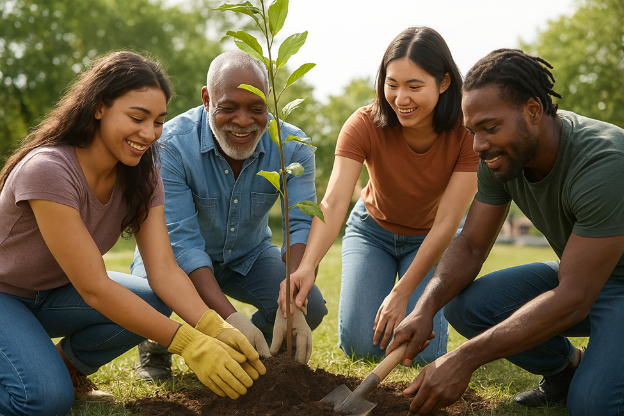
Figure 1. A diverse group of community members planting trees together, symbolizing unity, cooperation, and shared responsibility.
How Kindness and Emotional Intelligence Work Together
Kindness and emotional intelligence are most powerful when they operate together. Emotional intelligence helps people recognize when kindness is needed, how it should be expressed, and whether an action is genuinely supportive. Without empathy and emotional awareness, kindness may appear performative, intrusive, or disconnected from the needs of the person receiving it. Guided by emotional intelligence, kindness becomes thoughtful, appropriate, and transformative.
These qualities help build a culture of emotional safety. In such environments, people are more likely to express concerns, admit mistakes, collaborate across differences, and participate in problem-solving. This is especially important in schools, workplaces, faith communities, health settings, neighbourhood groups, and organizations serving diverse populations.
| Community Aspect | Role of Kindness | Role of Emotional Intelligence | Combined Outcome |
| Relationships | Encourages care, compassion, and generosity. | Promotes empathy, listening, and perspective-taking. | Deeper trust and stronger social connection. |
| Conflict Resolution | Supports forgiveness and relational repair. | Enables self-regulation and thoughtful communication. | More peaceful and constructive outcomes. |
| Leadership | Demonstrates humility, service, and care for people. | Builds influence through empathy and social awareness. | Leaders who motivate, unite, and protect community trust. |
| Mental Health | Reduces loneliness and increases social support. | Strengthens resilience, self-awareness, and emotional regulation. | Healthier communities with greater belonging and well-being. |
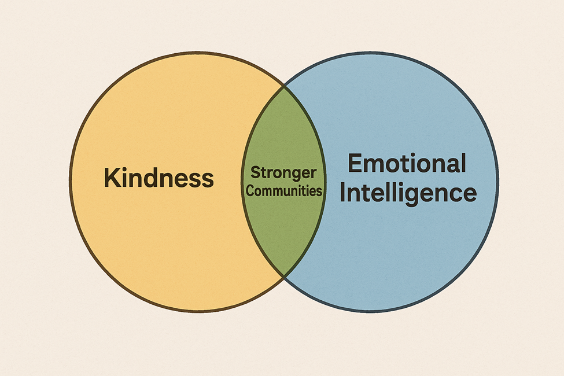
Figure 2. Venn diagram showing the overlap between kindness and emotional intelligence, with stronger communities at the intersection.
Building a Culture of Emotional Kindness
Emotionally intelligent and kind communities are built through deliberate practice. They require daily choices, institutional support, and leadership that models compassion with accountability. The following practices can help families, workplaces, schools, faith communities, and local organizations strengthen emotional kindness.
- Encourage active listening: People are more likely to feel valued when they are heard without interruption, dismissal, or immediate judgment.
- Create empathy-building opportunities: Workshops, reflective conversations, mentorship, and intergenerational activities can help people understand experiences different from their own.
- Recognize kindness publicly: Celebrating acts of service and compassion encourages a culture where care is visible, valued, and repeated.
- Support mental health and well-being: Access to counselling, peer support, psychoeducation, and wellness resources helps people develop self-awareness and healthier coping skills.
- Model compassionate leadership: Leaders shape community norms. When leaders communicate with humility, fairness, and empathy, they encourage others to do the same.
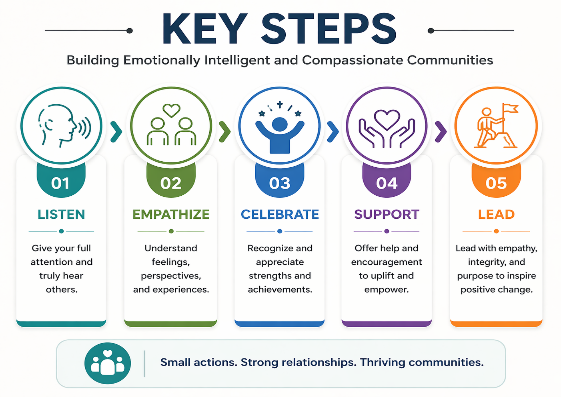
Figure 3. Infographic showing key practices: Listen, Empathize, Celebrate, Support, and Lead.
A Practical Example: The Ripple Effect
Consider a community initiative that invites residents to perform one intentional act of kindness each day for a week. The action may be small, such as helping an elder with groceries, writing a note of encouragement, checking on a new immigrant family, or volunteering at a local program. While each act may appear simple, the collective impact can be significant.
When kindness is repeated and supported by emotional awareness, it can reduce interpersonal tension, increase participation, and strengthen trust among community members. The ripple effect extends beyond the original act. People who receive kindness are often more likely to offer it to someone else, creating a cycle of care that supports social cohesion.

Figure 4. Smiling community members working together on a mural titled “Kindness Builds Us.”
Conclusion
Strong communities are not built by infrastructure, programs, or policies alone. They are built through relationships marked by empathy, respect, accountability, and care. Kindness humanizes our interactions, while emotional intelligence helps us navigate the complexity of human emotions and social differences.
Every decision to listen, support, include, forgive, and respond with understanding contributes to the health of a community. When kindness is guided by emotional intelligence, it becomes more than a personal virtue. It becomes a collective practice that strengthens belonging, improves well-being, and creates communities where people can live with dignity and connection.